 RED SUNSHINE
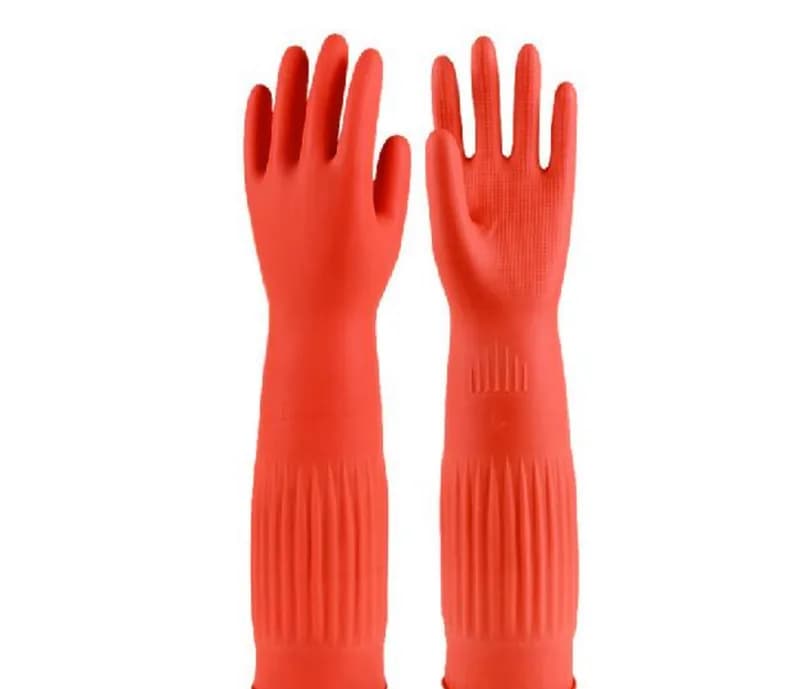
Household latex gloves are not a one-specification product
For importers, retailers and contract-cleaning suppliers, a reusable latex glove program succeeds when the specification matches the intended task, selling channel and pack format. “Latex household gloves” is a useful category name, but it is not a purchase specification. Buyers should define glove length, cuff style, lining, weight, size range, surface grip, colour, packaging and inspection requirements before asking for a quotation.
Start with the cleaning task
Shorter gloves are usually suitable for routine household washing, food-preparation support where permitted, light cleaning and retail multipacks. A longer cuff helps protect the wrist and lower forearm during bathroom cleaning, bucket work, janitorial use and splash-prone tasks. For jobs involving chemical products, the selected glove must be assessed against the actual chemical, concentration, temperature and contact time; a general household glove is not a universal chemical-protection claim.
Length affects comfort as well as coverage. A 29–33 cm glove is a familiar retail format. 38 cm and 45 cm styles offer more coverage for professional cleaning programs, while 55 cm styles may suit deeper-water or wet-work applications. State the finished length as a tolerance-controlled measurement, rather than relying only on a product name.
Choose lining and feel deliberately
Flocked or cotton-lined household latex gloves improve donning comfort, moisture management and perceived softness. They can be a strong choice for everyday domestic cleaning and repeated wear. Unlined designs may provide a closer fit and can be appropriate when buyers prioritise direct feel, compact packing or fast rinse-and-dry handling. “Flock lined” and “unlined” should appear clearly on the specification sheet, packaging and sales copy because they materially change the user experience.
Weight is another useful control point. It affects durability, hand feel and carton planning, but it should never be used alone to predict performance. Ask the supplier to state the weight by size where applicable, and confirm whether the quoted weight is a single glove or a pair. A good sampling review checks thickness consistency, visual finish, cuff integrity and the palm pattern as well as grams.
Make sizing commercially usable
Retail glove ranges commonly use S, M and L, but labels only work when the fit is consistent. Define palm-width targets, finished length and any applicable circumference measurements. If one carton contains several sizes, agree whether the sales unit is size-assorted or size-specific. For online retail, use a clear size guide and avoid promising a universal fit.
Colour and cuff decoration are practical commercial choices. They support shelf recognition, private-label identity and seasonal ranges. Confirm colour approval against physical samples, not monitor images, and keep a signed reference sample for repeat orders.
Turn packaging into a purchase requirement
Packaging should be specified from the consumer unit through to export carton. State pairs per inner pack, consumer pack type, pairs per carton, carton dimensions, barcode requirements, artwork revision control and label language. This matters because the same glove can be sold as a simple polybag, a printed retail bag, a header-card pack or a boxed set. Carton information also allows the buyer to plan container loading and warehouse handling early.
When a supplier quotes a minimum order quantity, confirm whether it applies per colour, per size, per artwork, per SKU or to the total program. For custom packaging, buyers should also agree the approval process and lead time before production starts.
Inspect the sample before approving bulk production
A production-ready household latex glove should be checked for pair matching, holes, stains, uneven edges, cuff tears, lining adhesion, odour, colour consistency and packing accuracy. Agree an inspection level and an acceptable-quality limit with the supplier. Keep the approved sample, packaging artwork and final specification in the same purchase file so that the next order can be compared against the same standard.
A detailed brief creates better quotations and fewer revisions. It also makes the product range easier to sell: the right glove length, lining, size and packaging are visible benefits for the end user and clear decision points for the buyer.
Use this guide to prepare the right questions.
This article is a sourcing checklist prepared by the Red Sunshine product and export team. Product suitability, documentation and final specifications must be confirmed for the selected model, application and destination market.
See our factory and quality processNext step
For an order-specific recommendation, send your application, preferred configuration, packaging direction and destination market to our team.
Send your requirements